Would you like to switch to the accessible version of this site?

Go to accessible site Close modal window

Don't need the accessible version of this site?

Hide the accessibility button Close modal window
Accessibility View Close toolbar
Rutherford Veterinary Clinic

11464-17 Avenue SW

Edmonton, Alberta T6W 2S5 CA

1(780) 761-0350

Open mobile navigation
  • Home
  • Patient Center
    • What to Expect
    • Online Forms
    • Veterinary Resources
    • Veterinary Referral Form
    • Payment Options
    • Virtual Office Tour
  • Services
    • Dental Cleaning
  • Emergency
  • About Us
  • Meet Our Team
  • Testimonials
  • Contact Us
  • Careers
  • Veterinary Topics
    • Pet Health
      • Chronic Conditions
      • Digestive and Oral Health
      • Diseases and Viruses
      • Pests and Parasites
      • Orthopedics
    • Today's Veterinarian
    • Choosing Your Pet
      • Finding Your Pet
      • Cats
      • Dogs
      • Exotics
        • Amphibians
        • Birds
        • Reptiles
          • Lizards
          • Turtles
      • Small Mammals
        • Ferrets
        • Rabbits
        • Domesticated Animals
          • Prairie Dogs
        • Pocket Pets
          • Chinchillas
          • Guinea Pigs
          • Hamsters
          • Hedgehogs
          • Rats
      • Livestock
        • Cows
        • Donkeys, Horses & Mules
        • Goats
        • Pigs
        • Poultry
        • Sheep
    • Living With Your Pet
      • Bringing Your Pet Home
      • Children and Pets
      • Providing Care
      • Travel
      • Saying Goodbye
    • Newsletter Library
      • Cats
      • Tips for Pet Owners
      • Behavior & Training
      • Fleas & Parasites
      • Keeping Pets Healthy
      • Recognizing Illness
      • Nutrition & Food
      • Pet Dangers
      • Seasonal Topics
      • Visiting the Vet
      • Equine
      • Newsletter Archive
        • Fun with Pets
        • Unbelievable Pets
    • Video Newsroom
      • Health Topics
      • Technology and Science
      • Other Interests
    • Newsletter Library
    • Client Survey
    • Pets4Kids
  • Home >
  • Articles >
  • Choosing Your Pet >
  • Exotics >
  • Reptiles >
  • Lizards >
  • Bearded Dragons

Bearded Dragons

  • Created in Choosing Your Pet, Exotics, Reptiles, Lizards
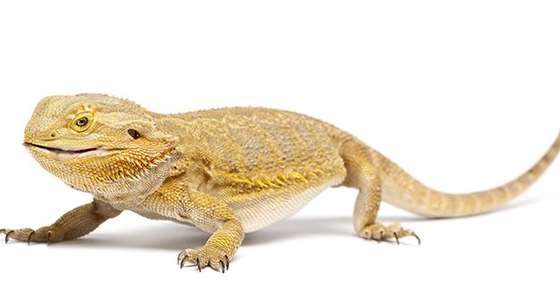
Image of a bearded dragon.

Bearded dragons are generally docile, and their aggressive displays are rarely seen in captivity. It is reported that even wild bearded dragons will sometimes allow themselves to be picked up without a struggle. Popular as pets, bearded dragons or "beardies" are moderately sized lizards native to Australia. They are not inexpensive to care for as they have, like many other lizards, strict nutritional and environmental requirements that need to be met for them to thrive. With an adult size of 18-24 inches (reached by about 2 years of age), a good sized tank/cage will be required. The expected life span of a bearded dragon is anywhere from 4-10 years, although with good attention to nutrition and the ideal environment, the high end of that range should be expected. However, they are social and easy to tame and handle, and show a range of fascinating behaviors that make them interesting to watch.

Food

In the wild, bearded dragons are omnivores, eating a mixture of invertebrate and vertebrate prey as well as plan material. In captivity, they should be fed primarily an insect diet, primarily crickets, with a variety of other cultured insect prey. They are prone to impaction of their digestive system, and the chitinous exoskeletons of insect prey can cause problems. This is especially true of crunchy bugs like mealworms - so it is best to feed these in limited quantities. Feeding insects right after a molt will help reduce the chance of an impaction as the exoskeletons are not as tough. Crickets also should not be too large, especially for baby bearded dragons (a rule of thumb: no larger than 1/3 the size of the dragon's head, and no longer that the distance between its eyes). Pinkie mice are also an acceptable food item for adults, and do not pose the problems with impaction that insects do. Insects should be gut loaded (fed nutritious food that is then passed on to the lizard) prior to feeding, and lightly dusted with a calcium supplement (with no phosphorus), and with a multivitamin about once a week.

In addition, they should be fed a mixture of green leafy vegetables, orange fleshed squash, carrots, other vegetables, and some fruits. The plant portion of the diet should be about 20-30% of the diet. Feed in a shallow bowl, although leafy vegetables can be clipped to the cage furnishings for snacking. Typically, they should be feed daily (more frequently as babies), and given as many insects as they will eat in 5-10 minutes. Veggies can be left in the cage all the time (changed daily, of course). Commercial diets are becoming available - but so far the long term success of these diets is not well known. I feel that feeding a varied diet is preferable, so if these diets are used they should probably not be the sole source of nutrition. One caution: do not feed fireflies (lightning bugs) as these are believed to be highly toxic to bearded dragons! If any wild caught insects are used beware of pesticide contamination.

Water

Water should be provided in a shallow dish, such as a shallow jar lid. Misting is also advisable as dragons are designed to get their moisture primarily from their food and licking dew drops. However, do not mist too much as to make the environment wet or humid.

Housing

Bearded dragons come from dry, arid areas, and are semi-arboreal, often observed climbing on rocks and branches. Therefore, a cage should be set up with a dry substrate, hiding areas (at each end of the temperature gradient, and rocks and branches to climb on. The branches and rocks should be securely placed so that neither they nor the dragon falls while climbing on them. Many people use sand (washed play sand, not silica sand) as a substrate, although some use paper towels, indoor/outdoor or reptile carpet, or paper. Avoid corn cob or walnut shells as substrate.If sand is used, feces can be scooped out daily, but the cage will still need a good cleaning/disinfecting several times a year. Many owners construct their own cages from wood and welded wire, which is acceptable especially as it often allows more room for the dragons. For a single bearded dragon a bare minimum of a 40 gallon tank will be necessary, but bigger is better. A secure lid will also be necessary.

Temperatures

Cage temperatures are also extremely important. A temperature gradient should be provided, as well as a basking spot at significantly higher temperatures. The gradient should be provided end to end and also vertically (by arranging a basking spot on a branch or rock off the bottom of the cage). The lower end of the gradient should be about 76 F (24 C), and the higher end 86 F (30 C) , with a basking temperature of 90-100 F (32-38 C) . Heat should be provided via an incandescent light or ceramic heater (make sure a ceramic socket is used) - experimentation with wattage and distance from the cage can be used to provide appropriate temperatures. Place thermometers in the cage (at either end and where the lizards bask) to monitor the temperatures - do not rely on estimating temperatures! Night time temperatures can fall to approximately 70 F (21 C). If needed, supplemental heat can be provided using an under the tank heating pad or heating strips. This may be necessary at night if the room temperature is very low. Avoid heating overnight with a light, as a consistent light-dark cycle (12 - 14 hours light) must be provided. Using the lights on a timer is the best way to ensure a consistent cycle.

Handling

Bearded dragons are generally docile, and can be easily handled with minimal socialization or effort into taming. It is important to scoop them up under the belly and support their belly in the palm of your hand with your fingers gently curled over the body. Their nails do get sharp, and should be trimmed regularly. They can be trimmed in a similar fashion to iguana claws.

  • Pet Health
    • Chronic Conditions
    • Digestive and Oral Health
    • Diseases and Viruses
    • Pests and Parasites
    • Orthopedics
  • Today's Veterinarian
  • Choosing Your Pet
    • Finding Your Pet
    • Cats
    • Dogs
    • Exotics
      • Amphibians
      • Birds
      • Reptiles
        • Lizards
        • Turtles
    • Small Mammals
      • Ferrets
      • Rabbits
      • Domesticated Animals
        • Prairie Dogs
      • Pocket Pets
        • Chinchillas
        • Guinea Pigs
        • Hamsters
        • Hedgehogs
        • Rats
    • Livestock
      • Cows
      • Donkeys, Horses & Mules
      • Goats
      • Pigs
      • Poultry
      • Sheep
  • Living With Your Pet
    • Bringing Your Pet Home
    • Children and Pets
    • Providing Care
    • Travel
    • Saying Goodbye
  • Newsletter Library
    • Cats
    • Tips for Pet Owners
    • Behavior & Training
    • Fleas & Parasites
    • Keeping Pets Healthy
    • Recognizing Illness
    • Nutrition & Food
    • Pet Dangers
    • Seasonal Topics
    • Visiting the Vet
    • Equine
    • Newsletter Archive
      • Fun with Pets
      • Unbelievable Pets
  • Video Newsroom
    • Health Topics
    • Technology and Science
    • Other Interests
  • Newsletter Library
  • Client Survey
  • Pets4Kids

Featured Links

Click to find out more

  • Services

    We strive to provide complete care for our patients. Learn more about all the services we provide.
    Learn More
  • Make An Appointment

    We will do our best to accommodate your busy schedule. Schedule an appointment today!
    Schedule Now
  • Online Forms

    Our patient forms are available online so they can be completed in the convenience of your own home or office.
    View Forms

Office Hours

Our Regular Schedule

Monday:

8:00 am

6:00 pm

Tuesday:

8:00 am

6:00 pm

Wednesday:

8:00 am

6:00 pm

Thursday:

8:00 am

6:00 pm

Friday:

8:00 am

6:00 pm

Saturday:

10:00 am

5:00 pm

Sunday:

Closed

Location

Find us on the map

Testimonials

Read What Our Clients Say

  • "First vet for my first pet! It is a really wonderful experience. They have really lovely staff members and even take us to tour in their really fantastic clinic!They have different room for different animal so they can feel great without other pet smell. We see that they pay a lot of attention on our puppy and give a lot of great advise for me as a new owner and we are really surprise that when we use the little tricks that the doctor told us, our little puppy feels nothing when she's doing her shots! My puppy even give the doctor a high five after the shoot is done! We can see all their staff members love animal and we are totally coming back for coming appointment!"
    Tina Li / Edmonton, Alberta
  • "Just as I posted on my Facebook wall, try Dr Hany Naguib at Rutherford Veterinary for the most excellent and thoughtful care! Tucker and I have never experienced better!!"
    Michele Hamilton- Friesen / Edmonton, Alberta
  • "The staff at Rutherford Vet are outstanding! Very helpful, caring and obviously very passionate in caring for animals! I will highly recommend them to everyone!"
    Cheryl Moroszczuk / Edmonton, Alberta
  • "We first visited Dr. Naguib several years ago when our dog Flûte, a cock-a-poo, had had several months of repeated skin irritations which often lead to infections. At that time, he told us that non shedding dogs were often subject to skin problems due to a reaction to protein and recommended a dog food in which the protein is hydrolyzed. Flûte has been happily eating this food and has been allergy free since that visit. Recently, we visited Dr. Naguib in his own clinic which is a very welcoming and state of the art facility. He quickly diagnosed an acute problem and kept Flute for further tests. Shortly after taking x-rays, he sent them to us by e-mail and communicated with us by phone to enable us to understand what we were seeing."
    Michele Foley / Edmonton, Alberta

Featured Articles

Read about interesting topics

    March Newsletter: How to Keep Your Cat Safe When Outdoors

    Wondering how your cat can safely spend time outdoors? ...

    Read More

    March Newsletter: How to Choose Safe Blankets for Pets

    Do you know how to pick a safe blanket for your pet? ...

    Read More

    February Newsletter: How to Reduce Dental Anxiety in Pets

    Does your pet hate toothbrushing? These tips could reduce dental anxiety. ...

    Read More

    February Newsletter: How to Safely Change Your Cat’s Food

    Buying a new food for your cat? Find out how to switch foods safely. ...

    Read More

    January Newsletter: Signs Your Pet Needs a Wellness Exam

    Does your pet need a wellness exam? ...

    Read More

    January Newsletter: How Your Veterinarian Can Help If Your Pet Ingests Something Toxic

    Has your pet eaten something it shouldn't have? Find out how your vet can help. ...

    Read More

    December Newsletter: Signs Your Pet Needs a Professional Cleaning

    Do you know when your pet needs a professional cleaning? ...

    Read More

    December Newsletter: Simple Ways to Keep Your Home Flea-Free for Your Pet’s Well-being

    Never want to see another flea again? Try these tips for a flea-free home. ...

    Read More

    November Newsletter: The Importance of Bloodwork for Your Pet’s Health

    Wondering if your pet really needs bloodwork? Find out the benefits of blood tests for your furry friend. ...

    Read More

    November Newsletter: Turkey Day Tips for Pet Owners

    Don't forget about your pet when making Turkey Day preparations. ...

    Read More

Newsletter Signup

Sign up for more articles

Error!

    Connect With Us

    • Copyright © 2026 MH Sub I, LLC dba iMatrix.
    • Admin Log In
    • Site Map