Would you like to switch to the accessible version of this site?

Go to accessible site Close modal window

Don't need the accessible version of this site?

Hide the accessibility button Close modal window
Accessibility View Close toolbar
Rutherford Veterinary Clinic

11464-17 Avenue SW

Edmonton, Alberta T6W 2S5 CA

1(780) 761-0350

Open mobile navigation
  • Home
  • Patient Center
    • What to Expect
    • Online Forms
    • Veterinary Resources
    • Veterinary Referral Form
    • Payment Options
    • Virtual Office Tour
  • Services
    • Dental Cleaning
  • Emergency
  • About Us
  • Meet Our Team
  • Testimonials
  • Contact Us
  • Careers
  • Veterinary Topics
    • Pet Health
      • Chronic Conditions
      • Digestive and Oral Health
      • Diseases and Viruses
      • Pests and Parasites
      • Orthopedics
    • Today's Veterinarian
    • Choosing Your Pet
      • Finding Your Pet
      • Cats
      • Dogs
      • Exotics
        • Amphibians
        • Birds
        • Reptiles
          • Lizards
          • Turtles
      • Small Mammals
        • Ferrets
        • Rabbits
        • Domesticated Animals
          • Prairie Dogs
        • Pocket Pets
          • Chinchillas
          • Guinea Pigs
          • Hamsters
          • Hedgehogs
          • Rats
      • Livestock
        • Cows
        • Donkeys, Horses & Mules
        • Goats
        • Pigs
        • Poultry
        • Sheep
    • Living With Your Pet
      • Bringing Your Pet Home
      • Children and Pets
      • Providing Care
      • Travel
      • Saying Goodbye
    • Newsletter Library
      • Cats
      • Tips for Pet Owners
      • Behavior & Training
      • Fleas & Parasites
      • Keeping Pets Healthy
      • Recognizing Illness
      • Nutrition & Food
      • Pet Dangers
      • Seasonal Topics
      • Visiting the Vet
      • Equine
      • Newsletter Archive
        • Fun with Pets
        • Unbelievable Pets
    • Video Newsroom
      • Health Topics
      • Technology and Science
      • Other Interests
    • Newsletter Library
    • Client Survey
    • Pets4Kids
  • Home >
  • Articles >
  • Newsletter Library >
  • Recognizing Illness >
  • Evaluation and Diagnosis of a Red Eye in Dogs

Evaluation and Diagnosis of a Red Eye in Dogs

  • Created in Newsletter Library, Recognizing Illness
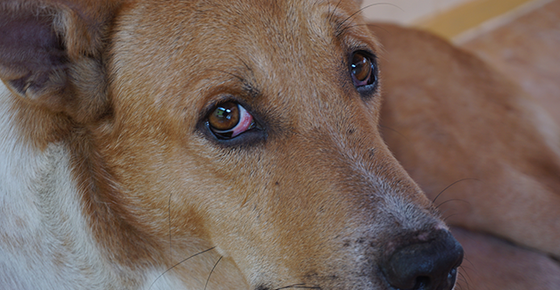
Image of a dog with red eyes.

Dogs occasionally develop a red eye. The redness may be in the white of the eye, in the clear part of the eye called the cornea, or within the eyeball. There are many causes of a red eye, but all ocular diseases should always be considered an urgent matter, and be checked immediately by a veterinarian.

Evaluation

A dog owner will typically be asked to describe the pet’s medical history, symptoms, and if there were any pertinent events prior to the development of the red eye, such as injury or illness. The veterinarian will perform a complete physical exam on any dog that has a red eye to look for any other abnormalities that may give a hint as to their cause. The veterinarian will then concentrate on the eyes. There are three basic ophthalmic tests: a Schirmer test, tonometry, and fluorescein staining.

A Schirmer test measures tear production. Special paper strips are placed in each eye and it is noted how many millimeters of wetness the tears can form in 60 seconds. Too little tear production is called keratoconjuntivitis sicca (KCS) or "dry eye" is the common name. Tonometry is used to measure the pressure inside the dog’s eyes; increased pressure indicates glaucoma. Fluorescein staining checks for any scratch or interruption of the outside covering of the cornea. A positive stain indicates a corneal ulcer.

There are other tests that may be performed. The veterinarian may swab any pus draining from the dog’s eyes and send it to the laboratory for testing. Lab work, including a chemistry panel, a complete blood count, an electrolyte panel and a urinalysis may be performed to check for underlying diseases. An ultrasound of an eye may be done to check for a detached retina or masses within the eye or between the eye and the bony eye socket.

Diagnosis

A veterinarian diagnoses the cause of a dog’s red eye by assessing symptoms, medical history, physical examination, and laboratory testing. The most common causes of a red eye are a corneal ulcer, glaucoma, and conjunctivitis.

Corneal ulcers usually result from trauma such as running into a bush, fighting with other pets, or rubbing their eye. Ulcers are treated with topical antibiotics, and checked with fluorescein stain every few days until healed.

Glaucoma can occur in any dog, is sometimes related to other conditions such as cataracts, but is genetic in some breeds. Cocker Spaniels, terriers, Poodles, Basset Hounds, and Beagles are especially prone to this disease. Glaucoma can be very serious, it often leads to blindness. There are topical medications used to reduce the increased pressure.

Conjunctivitis can have many causes. Dry eye causes a conjunctivitis; this is treated with a topical medication that increases the amount of tears produced. Conjunctivitis can also be caused by bacterial infections, viral infections, or other irritants.

There are many other causes of a red eye: uveitis, orbital disease, bleeding disorders, trauma, luxated lens, etc. Your veterinarian can sort through all the possibilities and determine the appropriate treatment.

Sources:

American Kennel Club, Canine Health Foundation. "Canine Eye Health." November 2013.

Barfield Laminack, Elizabeth, DVM; Myrna, Kathern, DVM, MS; Moore, Phillip Anthony, DVM, Diplomate ACVO. “Clinical Approach to Canine Red Eye.” Today’s Veterinary Practice, May/June 2013.

  • Pet Health
    • Chronic Conditions
    • Digestive and Oral Health
    • Diseases and Viruses
    • Pests and Parasites
    • Orthopedics
  • Today's Veterinarian
  • Choosing Your Pet
    • Finding Your Pet
    • Cats
    • Dogs
    • Exotics
      • Amphibians
      • Birds
      • Reptiles
        • Lizards
        • Turtles
    • Small Mammals
      • Ferrets
      • Rabbits
      • Domesticated Animals
        • Prairie Dogs
      • Pocket Pets
        • Chinchillas
        • Guinea Pigs
        • Hamsters
        • Hedgehogs
        • Rats
    • Livestock
      • Cows
      • Donkeys, Horses & Mules
      • Goats
      • Pigs
      • Poultry
      • Sheep
  • Living With Your Pet
    • Bringing Your Pet Home
    • Children and Pets
    • Providing Care
    • Travel
    • Saying Goodbye
  • Newsletter Library
    • Cats
    • Tips for Pet Owners
    • Behavior & Training
    • Fleas & Parasites
    • Keeping Pets Healthy
    • Recognizing Illness
    • Nutrition & Food
    • Pet Dangers
    • Seasonal Topics
    • Visiting the Vet
    • Equine
    • Newsletter Archive
      • Fun with Pets
      • Unbelievable Pets
  • Video Newsroom
    • Health Topics
    • Technology and Science
    • Other Interests
  • Newsletter Library
  • Client Survey
  • Pets4Kids

Featured Links

Click to find out more

  • Services

    We strive to provide complete care for our patients. Learn more about all the services we provide.
    Learn More
  • Make An Appointment

    We will do our best to accommodate your busy schedule. Schedule an appointment today!
    Schedule Now
  • Online Forms

    Our patient forms are available online so they can be completed in the convenience of your own home or office.
    View Forms

Office Hours

Our Regular Schedule

Monday:

8:00 am

6:00 pm

Tuesday:

8:00 am

6:00 pm

Wednesday:

8:00 am

6:00 pm

Thursday:

8:00 am

6:00 pm

Friday:

8:00 am

6:00 pm

Saturday:

10:00 am

5:00 pm

Sunday:

Closed

Location

Find us on the map

Testimonials

Read What Our Clients Say

  • "First vet for my first pet! It is a really wonderful experience. They have really lovely staff members and even take us to tour in their really fantastic clinic!They have different room for different animal so they can feel great without other pet smell. We see that they pay a lot of attention on our puppy and give a lot of great advise for me as a new owner and we are really surprise that when we use the little tricks that the doctor told us, our little puppy feels nothing when she's doing her shots! My puppy even give the doctor a high five after the shoot is done! We can see all their staff members love animal and we are totally coming back for coming appointment!"
    Tina Li / Edmonton, Alberta
  • "Just as I posted on my Facebook wall, try Dr Hany Naguib at Rutherford Veterinary for the most excellent and thoughtful care! Tucker and I have never experienced better!!"
    Michele Hamilton- Friesen / Edmonton, Alberta
  • "The staff at Rutherford Vet are outstanding! Very helpful, caring and obviously very passionate in caring for animals! I will highly recommend them to everyone!"
    Cheryl Moroszczuk / Edmonton, Alberta
  • "We first visited Dr. Naguib several years ago when our dog Flûte, a cock-a-poo, had had several months of repeated skin irritations which often lead to infections. At that time, he told us that non shedding dogs were often subject to skin problems due to a reaction to protein and recommended a dog food in which the protein is hydrolyzed. Flûte has been happily eating this food and has been allergy free since that visit. Recently, we visited Dr. Naguib in his own clinic which is a very welcoming and state of the art facility. He quickly diagnosed an acute problem and kept Flute for further tests. Shortly after taking x-rays, he sent them to us by e-mail and communicated with us by phone to enable us to understand what we were seeing."
    Michele Foley / Edmonton, Alberta

Featured Articles

Read about interesting topics

    March Newsletter: How to Keep Your Cat Safe When Outdoors

    Wondering how your cat can safely spend time outdoors? ...

    Read More

    March Newsletter: How to Choose Safe Blankets for Pets

    Do you know how to pick a safe blanket for your pet? ...

    Read More

    February Newsletter: How to Reduce Dental Anxiety in Pets

    Does your pet hate toothbrushing? These tips could reduce dental anxiety. ...

    Read More

    February Newsletter: How to Safely Change Your Cat’s Food

    Buying a new food for your cat? Find out how to switch foods safely. ...

    Read More

    January Newsletter: Signs Your Pet Needs a Wellness Exam

    Does your pet need a wellness exam? ...

    Read More

    January Newsletter: How Your Veterinarian Can Help If Your Pet Ingests Something Toxic

    Has your pet eaten something it shouldn't have? Find out how your vet can help. ...

    Read More

    December Newsletter: Signs Your Pet Needs a Professional Cleaning

    Do you know when your pet needs a professional cleaning? ...

    Read More

    December Newsletter: Simple Ways to Keep Your Home Flea-Free for Your Pet’s Well-being

    Never want to see another flea again? Try these tips for a flea-free home. ...

    Read More

    November Newsletter: The Importance of Bloodwork for Your Pet’s Health

    Wondering if your pet really needs bloodwork? Find out the benefits of blood tests for your furry friend. ...

    Read More

    November Newsletter: Turkey Day Tips for Pet Owners

    Don't forget about your pet when making Turkey Day preparations. ...

    Read More

Newsletter Signup

Sign up for more articles

Error!

    Connect With Us

    • Copyright © 2026 MH Sub I, LLC dba iMatrix.
    • Admin Log In
    • Site Map